Gibraltar Roaming Trap: Why Your Phone May Start Roaming Even While You're in Spain
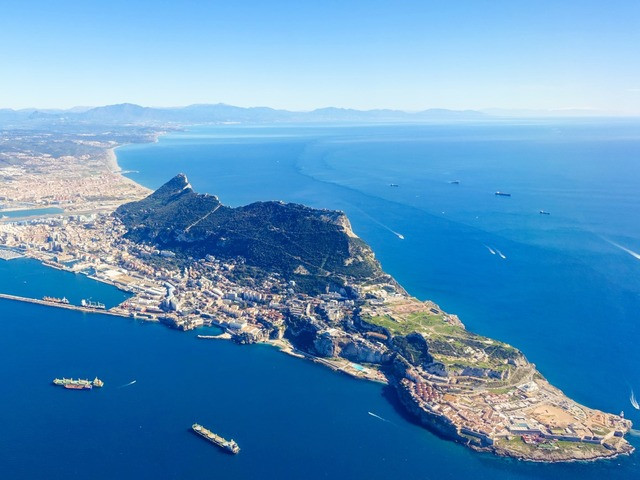
The southern coast of Spanish Andalusia, particularly the Bay of Algeciras and the border town of La Linea de la Concepcion, is a unique zone not only geographically but also from a telecommunications perspective. The majestic Rock of Gibraltar, visible from almost any beach on the Costa del Sol, is a British Overseas Territory.
For a long time, tourists didn't give a second thought to how mobile internet works in Gibraltar when crossing the border. However, following Brexit, the European Union's unified regulations ("Roam Like at Home") no longer guarantee free roaming in Gibraltar. Today, mobile connectivity here has turned into a patchwork quilt.
Many operators now classify Gibraltar differently from the EU roaming zone, although policies vary significantly between providers. This has triggered a return to default Pay-As-You-Go pricing. The Gibraltar roaming charges for non-partner operators can reach several euros per megabyte.
In this article, we will break down the hard facts on how mobile networks function on the Spain-Gibraltar border, why border data roaming in Spain occurs, and how eSIM technology helps optimize your travel connectivity costs.
Mobile Connectivity and Data Roaming in Gibraltar: Facts vs. Myths
To avoid falling victim to incorrect phone settings, it is essential to understand the technical side of the matter and separate myth from reality.
Myth 1: British mobile networks operate in Gibraltar
Reality: There are no physical Vodafone UK, EE, or Three towers on the territory of Gibraltar. The peninsula relies on its own, completely independent Gibraltar mobile networks. The largest national operator is Gibtelecom (operating under the Gintel brand), alongside infrastructure from GibFibre. When you cross the border, your smartphone connects to the local Gibraltar company’s hardware, not to UK-based networks.
Myth 2: Roaming in Gibraltar is guaranteed to be expensive for all Spanish SIM cards
Reality: This is not true, it depends entirely on your provider. For instance, Vodafone Espana officially confirms that Gibraltar (along with the UK) is included within its free roaming zone for all prepaid (Prepago) and specific contract plans under certain conditions. Conversely, subscribers of Movistar, Orange, Yoigo, or Digi who automatically connect to Gibtelecom will indeed face international Gibraltar roaming rates, where data usage fees can be sensitive.
Myth 3: A phone can catch a Moroccan network and incur hundreds of euros in charges
Reality: The Strait of Gibraltar is about 14 kilometers wide at its narrowest point. On the southern tip of the Rock (Europa Point) or at the Top of the Rock, a phone might occasionally scan a signal from Moroccan operators (Maroc Telecom or Orange Maroc) in rare cases. However, modern smartphones will never automatically switch to an African network if a more stable and closer signal from Spanish towers or Gibtelecom is available. The risk of accidental Moroccan roaming within Gibraltar itself is minimal unless you manually select this network in your settings.
The "Border Bleeding" Effect Explained
The physics of radio wave propagation do not comply with customs checkpoints. Gibtelecom’s base stations are installed on the highest points of the Rock, reaching altitudes of up to 426 meters. Due to the lack of physical obstacles over the water and flat terrain, this signal has immense penetrating power and broadcasts far beyond the peninsula's borders.
This creates a phenomenon known in telecommunications as Border Bleeding (network overlapping):
The Gibtelecom signal is strongly received in the Spanish town of La Linea de la Concepcion, on local beaches, and along the CA-34 highway.
If your smartphone is set to "Automatic Network Selection" and your Spanish carrier’s signal momentarily weakens on the promenade, your device can seamlessly switch to the stronger signal coming from Gibraltar.
While for subscribers of some networks like Vodafone Espana this handover might go unnoticed due to special inter-carrier agreements, for others it results in significant financial losses.
EU tourists vacationing in southern Spain know that the "Roam Like at Home" rule applies within the European Union. To use the internet in Spain, they simply enable the "Data Roaming" toggle in their smartphone settings and freely use their domestic data allowance.
Unwittingly, while sunbathing on Playa de la Atunara or dining in a restaurant in La Linea, a tourist might not even notice their phone catching the Gibraltar network. For their home operator, this signifies that the user has left the EU digital zone. The device initiates background data transmission at international rates, leading to sudden and heavy shock roaming bills upon returning home.
High-Risk Border Roaming Locations in Spain
There are several specific areas in Andalusia where radio frequency overlapping is at its peak:
- Playa de Santa Barbara and Playa de la Atunara (Eastern side): These beaches run along a straight line heading north from the border. There are zero natural barriers between them and the Top of the Rock. The Gibtelecom signal hits the sand at a perfect angle. If you are sitting by the water, your phone is at maximum risk of switching networks to the Gibraltar network.
- Playa de Poniente (Western side): Located near the Puerto Deportivo Alcaidesa Marina. Here the risk is even higher, as from the Gibraltar side this zone is backed up not only by the signal from the top of the Rock, but also by low-altitude cell sites from the Waterport area and the Gibraltar airport.
- The CA-34 Highway: This is the only road leading to the border checkpoint from the A-7 motorway (Autovia del Mediterraneo). Over the final 3 kilometers before the border control, the cellular airwaves become highly unstable. Real-time GPS navigators (Google Maps, Apple Maps, Waze) continuously exchange data packets to update traffic. It is in this specific traffic jam before customs where drivers' and passengers' phones most frequently make an invisible jump into Gibraltar roaming.
To prevent an automatic switch to the Gibraltar network while staying in these border areas of Spain (within a 10–15 km radius of Gibraltar), it is highly recommended to turn off "Automatic Network Selection" in your phone settings and manually select Spanish operator (Movistar, Vodafone, Orange, Yoigo, etc.). This way, even if the Spanish signal temporarily drops, your phone will lose network access entirely rather than unauthorizedly connecting to expensive local Gibraltar Gibtelecom towers.
Cruise Tourism and Maritime Port Connectivity
Gibraltar is one of the premier and fastest-growing cruise destinations in the Iberian region. Every year, the number of arrivals by massive international cruise ships at the Gibraltar Cruise Terminal continues to grow steadily. The port hosts vessels from giants like Royal Caribbean, MSC, Carnival, and P&O Cruises.
For cruise passengers, mobile internet in Gibraltar poses a double-sided challenge:
- Maritime Roaming: While the ship is moving in the open sea, connectivity is provided via expensive onboard satellite systems (Maritime Roaming).
- The Moment of Docking: Upon entering the Port of Gibraltar, the ship's satellite network automatically shuts down, and passengers' phones start scanning for land towers. Passengers see a stable 4G/5G icon pop up on their screens and make a critical mistake: they immediately start downloading travel guides, uploading videos to messengers, and updating apps. Because many home operators (especially American or Asian ones) lack local roaming agreements with Gibtelecom, these users are instantly hit with heavy international rates before they even step foot on the land of Gibraltar.
- The Tariff Divide: Because cruise ships carry international travelers, there is no one-size-fits-all rule for this port. While docked, passengers find themselves in completely different conditions. A British tourist with an O2 or Giffgaff contract might enjoy free data in Gibraltar. Meanwhile, their cabin neighbor on EE or Three UK will be subject to standard daily roaming fees. An American tourist with a T-Mobile SIM card or a German with a basic Telekom DE plan will find their home data plans on Gibtelecom networks automatically switched to expensive roaming, turning every downloaded megabyte into a significant expense.
How to Optimize Your Travel Connectivity Costs in Gibraltar
1) Fix Your Network to a Spanish Carrier Manually
For those planning a quick day trip to the Rock without purchasing a local plan, manual selection allows you to squeeze the most out of your Spanish data coverage. This solution is highly effective not only for locals but also for EU tourists using "Roam Like at Home" (just ensure your data roaming remains switched on). Before reaching passport control, disable "Automatic Network Selection" and force-lock your phone to your current Spanish network (Movistar, Vodafone, or Orange). This protects you from an invisible network jump right at the border checkpoint.
However, this method has a strict geographic limitation and is only effective on the Spanish side and within about one kilometer after crossing into Gibraltar (around the airport runway). As you walk deeper into town, move past the dense architecture of Main Street, or head toward the southern tip of the Rock, the Spanish signal will vanish entirely. In this moment, the device will lose signal completely, serving as a clear indicator that Spain's free digital zone has ended. This setup eliminates background data charges but requires you to be ready to stay in Gibraltar without mobile internet and navigation.
2) Purchase a Local Prepaid SIM Card in Town
For travelers staying long-term or those whose devices do not support digital SIM cards, buying a physical Gibtelecom Pay As You Go SIM is a viable option. 30-day mobile data packages start at 10 pounds for 2 GB. Higher data options include 10 GB for 15 pounds and 20 GB for 20 pounds. For short visits, a 7-day unlimited data pass is available for 15 pounds.
Official details: https://www.gibtele.com/mobile/pay-as-you-go
The primary downside here is mandatory bureaucratic identity registration. Local laws prohibit anonymous SIM card sales; you must present your passport at an official store or the airport, fill out registration forms, and wait for the manager to activate the SIM card under your profile. This is completely inefficient if you are visiting the Rock for just a few hours or one day, as you will lose precious time on registration.
3) Relying on Local Wi-Fi Hotspots
In central Gibraltar, along Main Street and near Marina Bay, most cafes, restaurants, and retail shops offer free public Wi-Fi. This is fine for checking your emails over lunch or sending a few photos to messengers. However, using maps to navigate while traveling or trying to hail a taxi away from restaurants will be impossible with this approach.
4) Travel eSIM: A Practical Alternative
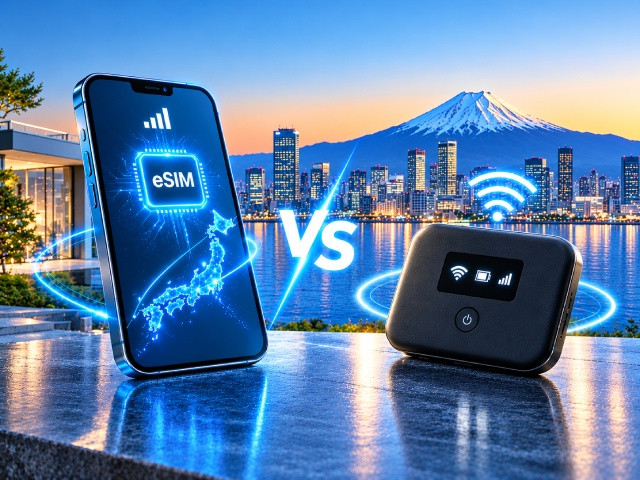
For travelers whose carriers charge high roaming fees, a prepaid eSIM for Gibraltar is by far the most cost-effective option, with rates starting at $2.00 for 1GB or $4.20 for 3GB, allowing you to comfortably use high-speed mobile data without worrying about unexpected network switches. eSIM is set up as your dedicated cellular data gateway and data roaming on your primary physical home SIM card is turned off, which saves incoming text messages but completely protects your device from incorrect roaming charges.
Seamless Connectivity for the Modern Digital Nomad
Gibraltar is an incredible historical and engineering marvel. It is a place where on a space of a few kilometers you can watch a commercial Boeing 737 take off right across an active pedestrian highway, meet Europe’s only wild monkey population, explore World War II military tunnels, and view the coast of Africa through a viewing scope.
This region is meant to be explored, photographed, and shared in real time. While the post-Brexit telecommunications landscape has created complex billing traps, turning to the eSIM for Gibraltar completely eliminates these hurdles.
By understanding the difference between commercial myths and real network setups, knowing your home operator's rules, and using modern eSIM tech solutions, you can transform your trip to Gibraltar into a completely secure, affordable, and stress-free digital experience. Protect your budget in advance, set up your smartphone according to engineering guidelines, and open new horizons without fear of hidden roaming charges!
Buy the best eSIM for Gibraltar here: https://awinstconnect.com/esim-gibraltar