Japan Trip Cost From USA: How To Get More For Every Dollar

A mid-range one-week trip to Japan from the USA costs about $2,500 per person, or around $5,000 for a couple sharing a hotel room, including a round-trip economy flight from Los Angeles. A budget version of the same week can cost about $1,550 per person. Your final total depends on the season, hotel choice, food budget, and how far you travel within Japan.
This guide breaks down the cost of a 7-, 10-, or 14-day trip to Japan from the USA. The estimates include flights, accommodation, food, transportation, mobile data, and a buffer for extras, so you can build a realistic budget before booking.
How Much Does a Trip to Japan Actually Cost?
For a 7-day trip (6 nights) visiting Tokyo and Kyoto, with two people sharing one hotel room, here is the estimated cost per person:
- Budget: about $1,550 per person, or $3,100 per couple.
- Mid-range: about $2,520 per person, or $5,040 per couple.
- Higher-comfort: about $3,810 per person, or $7,620 per couple.
If you have searched for the average cost of a trip to Japan from the US and found lower numbers, check three things. Some guides leave out the flight, some quote solo prices rather than the cost per person when sharing a room, and others omit expenses such as local transport, attraction tickets, hotel taxes, or luggage forwarding.
Where the Money Goes on a Mid-Range Week
| Expense | Per Person | Share of Total |
|---|---|---|
| Round-trip flight | $1,000 | 39.7% |
| Hotel (half of a shared room) | $600 | 23.8% |
| Food | $310 | 12.3% |
| Transport inside Japan | $280 | 11.1% |
| Mobile data | $11 | 0.4% |
| Entry fees, extras and 10% buffer | $320 | 12.7% |
| Total | $2,520 | 100% |
These figures are planning estimates, not statistical averages. The example assumes a round-trip economy flight from Los Angeles to Tokyo, six hotel nights, and a route that includes Tokyo and Kyoto.
The flight is a one-time cost. Hotel, food, and local transport costs accumulate as you add days, while your route determines how much you spend on longer train journeys.
How to Save Money and Time When Planning
Book Your Flight in the Right Season
Round-trip economy fares from Los Angeles to Tokyo can vary considerably by date, airline, and booking window. Compare fares for your actual travel dates rather than relying on one headline price.
Expect higher demand during cherry blossom season (late March to early April), Golden Week (late April to early May), mid-August and the New Year holidays. If your dates are flexible, set a fare alert and compare options a few months ahead.
Use an IC Card Instead of Buying Individual Tickets
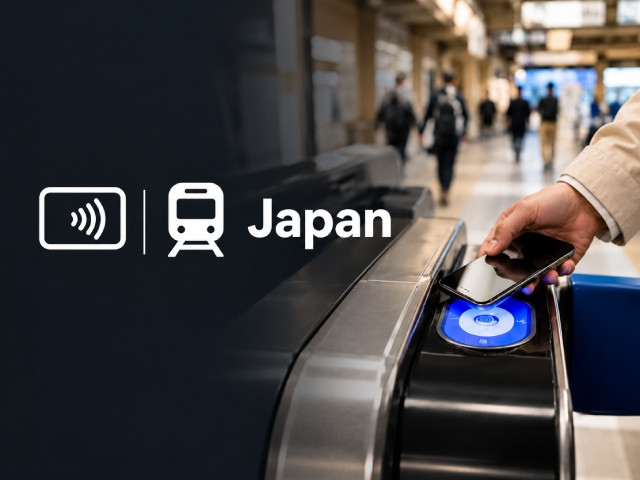
An IC card is a rechargeable transit card used for trains, subways, and buses. Suica and PASMO are common options in Tokyo, and compatible cards also work in many other Japanese cities. Suica can be added to Apple Wallet on supported iPhones.
An IC card doesn't necessarily make each ride cheaper, but it makes getting around easier: tap in and out instead of calculating a fare for every journey. Many cards also work for small purchases at convenience stores and vending machines.
For Tokyo Metro, ordinary adult IC fares currently range from around ¥178 to ¥324 (about $1.15–$2.05), depending on distance. That makes individual rides relatively affordable, although frequent journeys and longer intercity trips add up.
How Much Should You Budget for Transportation in Japan?
For a typical first-time, 7-day trip covering Tokyo and Kyoto, budget approximately $280 per person for transportation within Japan.
This estimate reflects a practical itinerary rather than using a rail pass price as the transport budget. It assumes:
- Round-trip airport transfers between Tokyo and the airport, using a regular train or another reasonably priced option.
- Local train and subway journeys around Tokyo for sightseeing.
- A Shinkansen journey between Tokyo and Kyoto, followed by the return journey to Tokyo.
- Local trains, subway or bus rides around Kyoto.
- A modest allowance for route variations and additional short journeys.
The estimate is intended for a traveler using public transport for most journeys. It does not assume daily taxis, premium airport transfers or several extra long-distance excursions. Actual fares depend on the airport, the stations you use, your sightseeing schedule, and whether you buy any discount tickets.
For longer trips, transport spending usually increases as you add destinations. A 10-day Tokyo–Kyoto itinerary with day trips to Nara and Osaka might need around $320 per person at the mid-range level. A 14-day trip that also includes Hakone and more intercity travel might need around $410.
Should You Buy a Japan Rail Pass?
Consider the nationwide Japan Rail Pass if your itinerary includes several long-distance rail journeys within its validity period. However, it isn't automatically the cheapest option for every visitor.
The ordinary 7-day pass costs ¥53,000 (about $340), whether purchased through the official Japan Rail Pass website or through overseas agencies, following the October 1, 2026 price increase. Check the official price and terms before booking.
A simple Tokyo–Kyoto return journey by Shinkansen costs approximately ¥29,000 (about $185), depending on the train and ticket conditions. For a trip focused on Tokyo and Kyoto, buying individual tickets may therefore cost less than purchasing the nationwide pass. If your route includes several long-distance journeys, for example, Tokyo, Kyoto, Hiroshima, and a return to Tokyo, compare the total cost of individual tickets with the pass price before deciding.
Business Hotels vs. Mid-Range Hotels
A business hotel is a compact, no-frills hotel designed primarily for working travelers. Chains such as Toyoko Inn and APA Hotel often offer private rooms, bathrooms, and convenient locations near train stations.
For this guide, the accommodation assumptions are approximately:
- Budget: ¥12,000 per room per night (about $76).
- Mid-range: ¥31,400 per room per night (about $200).
- Higher-comfort: ¥38,000 per room per night (about $242).
Prices vary with the city, season, room size, and booking date. In a business hotel, rooms may be small, but you can often save money while keeping a private bathroom and a convenient sightseeing location. Couples should compare the price of a double room with two separate rooms.
Stay in One Base and Take Day Trips
Frequent hotel changes add transport costs, check-in time, and sometimes luggage-forwarding fees. On a 10-day trip, staying in Kyoto for several nights and taking day trips to Osaka and Nara can be more convenient than changing hotels every couple of days.
A simpler itinerary can help you spend more time exploring and less time checking in, packing, and traveling between accommodations.
One-Week, 10-Day and Two-Week Japan Trip Cost: Three Budget Examples
These are worked examples, not statistical averages. Each uses the same broad assumptions so you can adjust the numbers to your own itinerary.
Shared Assumptions
- Two adults sharing one hotel room; the per-person accommodation cost is half the room price.
- Round-trip economy flight from Los Angeles (LAX) to Tokyo: $700 budget, $1,000 mid-range, and $1,600 higher-comfort.
- Exchange rate for estimates: ¥157 = $1.
- Hotel costs vary by tier and trip length.
- Food per person per day: approximately $25.50 budget, $44.60 mid-range, and $76.40 higher-comfort.
- Transport is modeled around the destinations and journeys in each example. It includes local public transport and intercity travel, with a larger allowance for extra journeys and taxis in the higher-comfort tier.
- Entry fees, extras, and a 10% buffer cover additional in-country expenses, including incidental costs and local hotel taxes.
- Mobile data is based on an Awinst Connect Japan eSIM plan; check current prices and package terms before purchasing.
Trip to Japan Cost for 1 Week (7 Days, 6 Nights)
Route: Tokyo (3 nights), Kyoto (3 nights), then return to Tokyo for the flight home. The transportation estimate allows for the intercity Shinkansen journeys, local sightseeing trips, and airport transfers.
| Expense (USD) | Budget | Mid-Range | Higher-Comfort |
|---|---|---|---|
| Round-trip flight | $700 | $1,000 | $1,600 |
| Hotel (half a room) | $230 | $600 | $720 |
| Food | $180 | $310 | $530 |
| Transport in Japan | $240 | $280 | $410 |
| Mobile data (eSIM) | $11 | $11 | $18 |
| Extras + 10% buffer | $190 | $320 | $520 |
| Total per person | $1,550 | $2,520 | $3,810 |
| Total per couple | $3,100 | $5,040 | $7,620 |
The transportation figures are estimates for the route described. The budget option assumes careful route planning and limited extras; the higher-comfort option allows more flexibility and some additional paid transport.
10-Day Trip to Japan Cost (9 Nights)
Route: Tokyo (4 nights), Kyoto (5 nights), with day trips to Nara and Osaka. The transport allowance covers intercity journeys, local travel, and additional sightseeing trips.
| Expense (USD) | Budget | Mid-Range | Higher-Comfort |
|---|---|---|---|
| Round-trip flight | $700 | $1,000 | $1,600 |
| Hotel (half a room) | $340 | $890 | $1,080 |
| Food | $260 | $450 | $760 |
| Transport in Japan | $280 | $320 | $490 |
| Mobile data (eSIM) | $15 | $15 | $24 |
| Extras + 10% buffer | $240 | $420 | $680 |
| Total per person | $1,830 | $3,100 | $4,640 |
| Total per couple | $3,660 | $6,200 | $9,280 |
A longer stay gives you more time to explore without paying for another international flight. Day trips from Kyoto can also be less expensive than moving to a new hotel for every destination.
Trip to Japan Cost for 2 Weeks (14 Days, 13 Nights)
Route: Tokyo (5 nights, including a Hakone day trip), Kyoto (5 nights), and Osaka (3 nights). The transport allowance reflects the extra local journeys and intercity travel this itinerary requires.
| Expense (USD) | Budget | Mid-Range | Higher-Comfort |
|---|---|---|---|
| Round-trip flight | $700 | $1,000 | $1,600 |
| Hotel (half a room) | $490 | $1,290 | $1,560 |
| Food | $360 | $620 | $1,070 |
| Transport in Japan | $340 | $410 | $630 |
| Mobile data (eSIM) | $21 | $21 | $32 |
| Extras + 10% buffer | $300 | $540 | $880 |
| Total per person | $2,220 | $3,890 | $5,780 |
| Total per couple | $4,440 | $7,780 | $11,560 |
The two-week itinerary costs more overall, but you only pay for the international flight once. The final transport cost depends on whether you add destinations beyond the route above and how often you use taxis or other premium options.
Why Two Weeks Doesn't Cost Twice as Much as One
You pay for the international flight once whether you stay for one week or two. In these examples, the mid-range one-week trip costs about $2,520 per person, while the two-week trip costs about $3,890 — not twice the one-week total.
The extra week adds hotel nights, food, local transport, and activities, but it doesn't require a second round-trip flight. If you already plan to travel that far, a longer stay can offer better value per day.
No Overpaying: Cash, Exchange Rates and Card Fees
Japan accepts cards at many hotels, chain restaurants and larger stores, but some smaller eateries, temples and shrine offices still prefer cash. A little planning can help avoid unnecessary fees.
- Bring the right cards. Use a credit card with no foreign transaction fee for most purchases. A debit card with low or reimbursed foreign ATM fees can help with cash withdrawals. Check your bank's terms before traveling.
- Withdraw yen at convenience-store or Japan Post ATMs. Seven Bank ATMs in 7-Eleven stores accept many foreign cards. Fees depend on the card and transaction; check the screen before confirming a withdrawal.
- Avoid exchanging all your dollars at the airport. Compare the exchange rate and fees before using an airport counter. An ATM withdrawal with a low-fee card may offer better value.
- Always choose yen. If a card terminal or ATM offers to charge you in US dollars or Japanese yen, choose yen to avoid the machine operator's dynamic currency conversion rate.
- Carry some cash. Having ¥10,000–20,000 available can be helpful for smaller restaurants, temple entry, coin lockers, and other purchases. Withdraw larger amounts less frequently if your card's fee structure makes repeated small withdrawals expensive.
Costs First-Time Visitors Forget to Budget
Hotel taxes. Accommodation taxes vary by city, nightly rate, and local rules. Check whether your booking price includes them, especially when staying in Kyoto or other destinations with accommodation taxes.
The departure tax. Japan's international tourist departure tax is generally included in the airfare, but check the fare breakdown and current rules when booking.
Observation decks and timed tickets. Popular attractions can charge different prices depending on the time slot or booking method. Reserve major attractions in advance when your dates are fixed.
Laundry. On a 10- to 14-day trip, you may need one or two coin-laundry visits. Some business hotels have on-site washing machines.
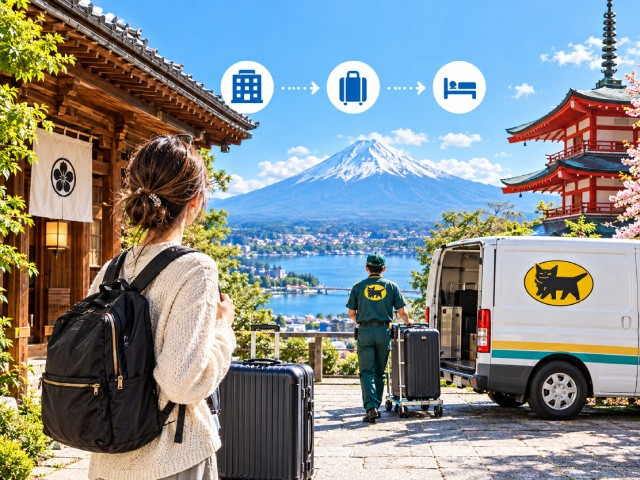
Luggage forwarding. Takkyubin is a hotel-to-hotel luggage delivery service. It can be convenient when traveling between Tokyo, Kyoto, and Osaka, but it adds an extra cost. Check the provider's current rates and delivery timing.
Mobile data. Include connectivity in your budget rather than leaving it until you land. An eSIM can help you access maps, train times, and translation tools as soon as you arrive.
Solo vs. Couple: How Sharing a Room Changes the Budget
Some costs can be shared when you travel as a pair: the hotel room and, in some cases, taxi rides or a data connection. Other costs remain per person, including flights, food, individual train tickets, and many attraction fees.
In the mid-range one-week example, the hotel budget is $600 per person because two travelers share a room. A solo traveler paying full price for the same room would spend more on accommodation. Choosing a single room at a business hotel can help reduce the difference.
Mobile Data in Japan: Why an eSIM Can Save Money
The following comparison uses illustrative prices checked for this guide. Actual plans, prices, and conditions may change, so confirm them before purchasing.
| Option | 7 Days | 10 Days | 14 Days | Important Details |
|---|---|---|---|---|
| US carrier roaming day pass ($12/day) | $84 | $120 | $168 | Charged per line, per day |
| Airport SIM, unlimited | About $29–49 | Varies by plan | Varies by plan | Requires an unlocked phone; airport counter queue |
| Pocket Wi-Fi, estimated at ¥860/day | About $38 | About $55 | About $77 | Device must be carried, charged and returned |
| Awinst Connect eSIM, 4G/5G Unlimited | $11.20 | $14.80 | $20.70 | Data only; compatible unlocked phone required |
| Awinst Connect eSIM, 5G Unlimited Premium | $18.00 | $24.00 | $32.30 | Data only; compatible unlocked phone required |
Roaming is convenient if you need to keep using your US carrier plan, but it can cost substantially more than an eSIM for a two-week trip.
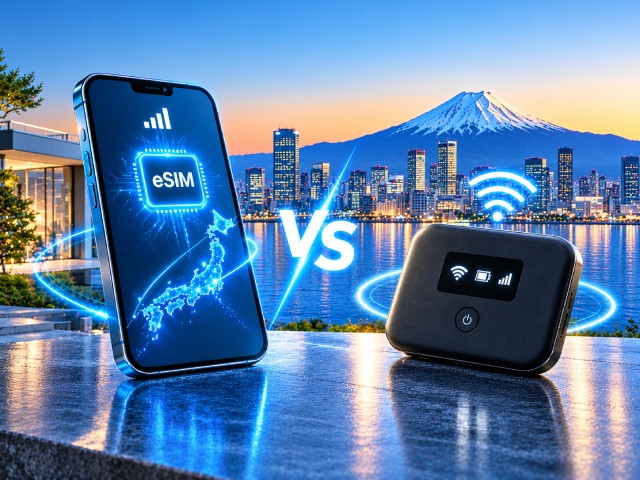
An eSIM is a digital SIM you can install by scanning a QR code. If your phone is unlocked and supports eSIM, you can set it up before leaving the US and connect after arriving in Japan, without collecting or returning a physical device.
Plan terms matter. Data speeds, daily high-speed allowances, hotspot support, and fair-use restrictions vary by provider and package. Read the plan details carefully before choosing one.
To use maps, check train schedules, and translate signs without overpaying for expensive roaming or relying on spotty Wi-Fi at airports and stations, the best solution is to set up an eSIM in advance. It is the easiest way to ensure you have reliable mobile internet the moment you arrive.
Install your eSIM before your trip, and as soon as you land, it activates and connects you directly to Japan's top-tier KDDI network for stable, high-speed 5G access. With Awinst Connect, you can easily choose a plan tailored to your budget, data volume, and travel style—whether you prefer an option with a daily cap or a Premium unlimited package—ensuring a smooth, seamless experience from the very first second of your journey.

Install your eSIM at home, activate in Japan — View plans (Use code PROMO10)
FAQ
When Is the Best Time to Book Tickets to Japan?
Compare fares as early as you can and set a price alert. Flight prices vary by route and season. Cherry blossom season, Golden Week, mid-August and the New Year holidays can be busy, so check accommodation and flight prices together.
Does a 2-Week Trip Cost Twice as Much as a 1-Week Trip?
No. You pay for the international flight once. In this guide's mid-range example, a week costs about $2,520 per person and two weeks cost about $3,890, compared with $5,040 if you simply doubled the weekly cost.
Is Japan Cheaper for Two People Than Traveling Solo?
Usually, on a per-person basis, when both travelers share a room. In the mid-range one-week example, each person pays about $2,520 when sharing accommodation. A solo traveler using the same room would pay around $3,120.
How Can You Save on Hotels in Japan?
Compare business hotels and mid-range properties, book early for busy seasons, and consider staying several nights in each base rather than changing hotels frequently. Couples can lower the per-person accommodation cost by sharing a room.
Is an eSIM Cheaper Than an Airport SIM or Pocket Wi-Fi?
It can be. In the illustrative prices above, a 7-day eSIM costs less than the airport SIM and pocket Wi-Fi examples. Check current prices, coverage and plan limits, and confirm that your phone is unlocked and eSIM-compatible.
What Is the Biggest Budget Mistake First-Time Visitors Make?
Planning without including the international flight, intercity transportation and additional expenses. Hotel taxes, timed attraction tickets, luggage forwarding, laundry and mobile data can also increase the final total. In the mid-range weekly example, the flight alone is about 40% of the overall budget.